
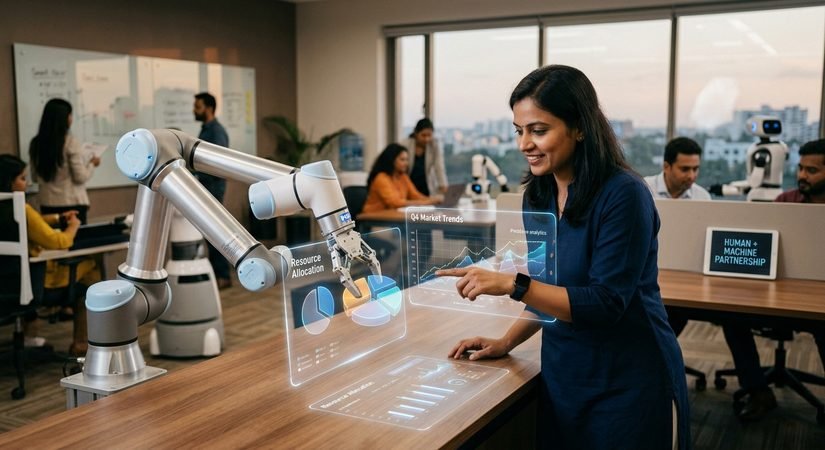
Artificial intelligence (AI) is no longer an abstract concept reserved for tech companies or research labs—it is now the beating heart of global business transformation. Whether it is Amazon predicting your next purchase, Netflix curating personalized content, or Tesla cars learning from real-time data, AI has become the invisible engine driving innovation, efficiency, and growth.
In this study, Anushka Driessen explores how AI is evolving from a supporting technology into a core business model—a new digital framework that redefines how companies operate, compete, and deliver value.
AI is not just a tool for automation; it is the foundation of a new economic era based on intelligence, data, and adaptability.
1. AI: The Digital Brain of Modern Enterprise 🤖
At its core, AI is about learning from experience. Just like the human brain, it observes patterns, makes predictions, and improves over time.
In business, this translates to an AI ecosystem where systems such as Customer Relationship Management (CRM) and Enterprise Resource Planning (ERP) continuously interact with real-time data streams.
These intelligent systems enable businesses to:
- Automate repetitive and routine tasks, freeing human talent for strategic work.
- Analyze massive datasets to generate insights that drive smarter decisions.
- Engage customers through hyper-personalized experiences and real-time responsiveness.
As Anushka Driessen explains, the integration of AI within business frameworks represents a shift from static models to living systems—models that evolve as data evolves.
For example:
- E-commerce platforms like Shopify use AI to optimize pricing, suggest inventory decisions, and enhance customer journeys.
- In finance, AI algorithms detect fraudulent transactions within milliseconds.
- In healthcare, AI predicts disease risk and personalizes patient treatment plans.
These applications reveal the transformative power of AI as a business model, rather than merely a technological add-on.
2. The Intelligence Behind the Model: Data as the New Currency 📊
Every AI system thrives on one essential resource—data.
In Anushka Driessen’s framework, Data Intelligence (DI) sits at the core of the AI business model. Through data, companies gain a deeper understanding of their customers, operations, and markets.
By mining and analyzing data, businesses can:
- Identify trends in customer behavior.
- Predict future needs.
- Design solutions with greater precision.
- Improve operational efficiency.
- Make faster and more informed decisions.
Examples of Data-Driven AI
- Retail: AI-driven data insights help forecast consumer demand and dynamically adjust stock levels.
- Banking: Banks use predictive analytics to manage risk and personalize loan offerings.
- Marketing: Marketing teams use AI to create customized campaigns that improve engagement and conversion rates.
The result is clear: businesses that think with data can make faster, smarter, and more profitable decisions.
As Anushka Driessen puts it, “Data is no longer just an asset; it’s the bloodstream of intelligent business.”
3. The Evolution of AI-Driven Business Models ⚙️
In the digital economy, AI is accelerating the transition from traditional business frameworks to platform-based ecosystems.
Anushka Driessen identifies several key technological and strategic trends fueling this evolution.
3.1 Automated Machine Learning (AutoML)
AutoML is reshaping how organizations build and deploy AI models.
Instead of relying solely on data scientists, even non-technical users can now train algorithms to solve business problems. This democratization of AI allows startups and small businesses to compete with enterprise-level innovation.
3.2 AI-Optimized Hardware
The surge in AI applications has led to the development of specialized processors—chips designed specifically for AI workloads.
Companies such as Intel, NVIDIA, and Qualcomm are developing microchips that deliver extraordinary processing speeds, enabling faster computation in areas such as:
- Natural language processing
- Speech recognition
- Autonomous systems
- Real-time analytics
3.3 AI and the Internet of Things (IoT)
When AI meets IoT, the result is intelligent automation at scale.
Devices such as smart thermostats, self-driving vehicles, and connected manufacturing systems collect real-time data that AI can use to make autonomous decisions.
The AI + IoT model is becoming a key component of:
- Smart cities
- Precision agriculture
- Industrial automation
- Connected manufacturing
3.4 AI and Holographic Technology
The convergence of AI, holograms, and Extended Reality (XR) is redefining human interaction in digital spaces.
With ultra-fast 5G and emerging 6G networks, holographic business meetings, immersive customer experiences, and interactive advertising could become increasingly common.
3.5 Deep Learning and Instant Analytics
Deep learning—AI’s ability to mimic aspects of human neural networks—is taking real-time analytics to new levels.
Businesses can increasingly detect, predict, and respond to changes almost instantly.
For example, logistics companies can use deep learning to optimize routes based on weather and traffic conditions, potentially generating significant operational savings.
4. The Business Transformation Cycle 🧩
AI transforms business not only through technology but also through a self-sustaining feedback loop known as the AI Business Cycle.
This cycle follows four key stages:
Stage 1: Data Collection
Businesses gather information from multiple touchpoints, including:
- Customers
- Sensors
- Business operations
- Digital platforms
Stage 2: Learning and Modeling
AI analyzes the collected data to identify patterns, relationships, and correlations.
Stage 3: Decision-Making
The insights generated by AI are transformed into strategic decisions or automated actions.
Stage 4: Optimization
Every outcome generates new data, which feeds back into the system and enables continuous improvement.
This cycle mirrors how human learning evolves—but on a global and increasingly automated scale.
5. The Challenges: Security, Privacy, and Digital Inequality ⚠️
While AI offers unprecedented opportunities, it also creates significant challenges.
5.1 Data Privacy and Ethical Use
AI depends on large amounts of data, which creates privacy risks.
Unregulated data collection can result in:
- Surveillance
- Algorithmic bias
- Misuse of personal information
- Unethical decision-making
Responsible AI frameworks are therefore essential to protect users and ensure fairness and transparency.
5.2 Cybersecurity Threats
As businesses digitize more operations, they can also become more vulnerable to cyberattacks.
AI systems themselves may be targeted by malicious actors, potentially resulting in:
- Manipulated algorithms
- Data breaches
- Unauthorized access
- Disruption of business operations
In response, advanced AI-driven cybersecurity tools are being developed to detect and counter threats in real time.
5.3 The Digital Divide
Developing countries often lack the infrastructure required for full-scale AI integration.
Without access to:
- Reliable data systems
- Cloud computing
- Digital infrastructure
- Education and training
- High-speed connectivity
many regions risk falling behind in the global AI economy.
To bridge this gap, Anushka Driessen emphasizes the importance of inclusive digital policies, cross-border collaboration, investment in education, and improved connectivity.
6. Human + Machine: The New Business Partnership 💬
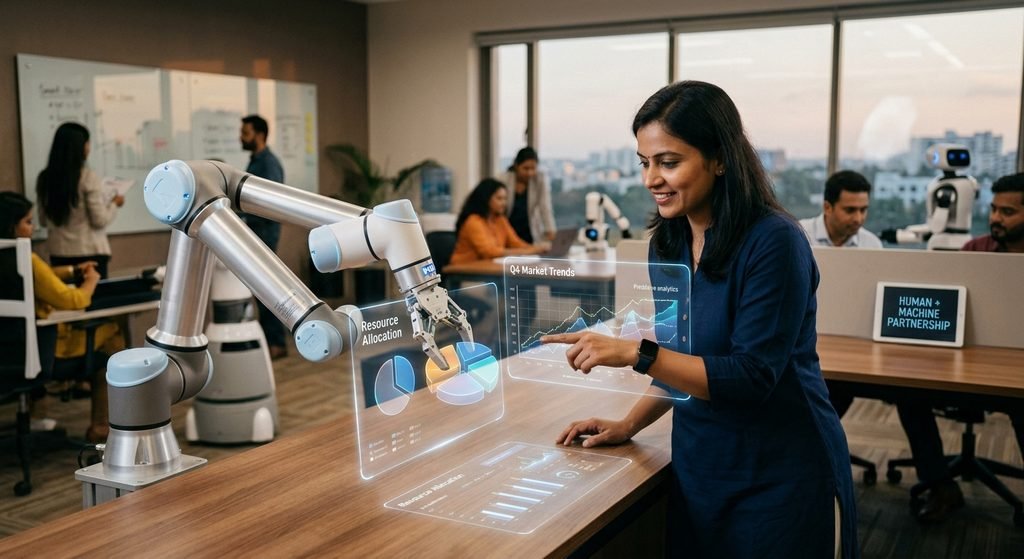
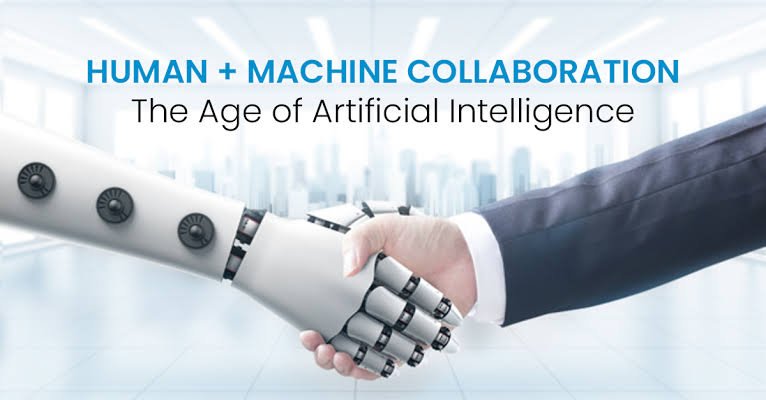
AI is not simply about replacing people—it is about empowering them.
The future lies in human–AI collaboration, where machines handle complex computations and humans contribute creativity, empathy, critical thinking, and ethical judgment.
Imagine a workplace where:
- AI manages operational logistics while humans focus on innovation.
- Digital assistants analyze financial performance and suggest improvements.
- AI mentors employees by providing personalized learning paths.
This synergy between human insight and machine intelligence leads to augmented decision-making—making decisions smarter, faster, and more strategically.
As Anushka Driessen explains, the true value of AI comes not from automation alone, but from the partnership between technology and human imagination.
7. The Role of Leadership in the AI Era 🧠
Adopting AI is not simply a technical decision—it is also a leadership transformation.
Executives must foster an AI-ready culture that values:
- Experimentation
- Continuous learning
- Adaptability
- Data-driven decision-making
- Ethical innovation
Forward-thinking leaders are those who:
- Encourage teams to experiment with AI tools.
- Integrate data literacy into organizational training.
- Make ethics and transparency core elements of business strategy.
By doing so, organizations can ensure that AI is not merely a departmental initiative but becomes a company-wide mindset.
8. AI and the Future of Global Business 🌍
Artificial intelligence is reshaping the global economy in ways that we are only beginning to understand.
As automation expands, jobs are likely to evolve rather than simply disappear. New roles are expected to emerge around areas such as:
- AI supervision
- Data strategy
- AI ethics
- Digital creativity
- Human–AI collaboration
The future business model is likely to be:
Data-Centric
Every major decision is increasingly supported by data and analytics.
Platform-Based
Businesses collaborate across industries and digital ecosystems.
Human-Enhanced
Machines support and augment human expertise rather than simply replacing it.
From finance and healthcare to education and logistics, virtually every sector will be influenced by the shift toward AI-driven intelligence.
9. Conclusion: Reimagining Business Through Intelligence 💡
As Anushka Driessen’s study concludes, artificial intelligence is becoming a cornerstone of the new business era.
AI brings together data, technology, and human insight within an intelligent ecosystem that can continuously learn, adapt, and evolve.
Companies that embrace AI can do more than improve efficiency. They can:
- Redefine innovation.
- Build smarter systems.
- Create better customer experiences.
- Improve decision-making.
- Adapt more effectively to changing markets.
The future of business will not be defined solely by automation. Instead, it will be shaped by the ability of organizations to combine human creativity with machine intelligence.

AI is not replacing people—it is amplifying what humans do best: think, create, and evolve.