

Digital transformation, artificial intelligence strategy, and the future of work — lessons from China’s innovation ecosystem
We think in the West that we are mitigating risks with slow plans, but in Shenzhen I saw the harsh reality: standing still is not caution — it is a signature under your own irrelevance.
We are addicted to comfort in the West. Our brains evolved to seek safety, predictability, and risk mitigation. We believe we can maintain control through neat five-year plans, sluggish meetings, and linear R&D trajectories.
During my research trip to Shenzhen this year, however, it became painfully clear to me: what feels like “smart risk management” in your head is, in practice, nothing more than a self-chosen death sentence for your own relevance in an era defined by AI-driven digital transformation.

What I saw there defies everything we think we know about peak performance, scale, and speed. Barely fifty years ago (in 1980), Shenzhen was nothing more than a sleepy fishing village. The fact that you can build a metropolis out of nothing in a mere forty-four years — one that is heading toward an economic giant of over 4 trillion yuan, bursting with the highest concentration of R&D, and breathing with futuristic architecture — is the ultimate proof of what happens when vision and ruthless execution unite in a true smart manufacturing and innovation ecosystem.
For Anushka Driessen, this is the most critical takeaway: “The biggest strategic mistake in Western boardrooms is the illusion that you can compete with a local product against an ecosystem that uses the entire world as a testbed.”
What We Miss While Our Focus Is Somewhere Else (Inattentional Blindness)
Look at how we innovate in Europe: we resemble the famous test subject who misses the gorilla on the basketball court because they are too focused on counting passes. We blind ourselves within our own software-hardware silos and sluggish systems — a costly failure of organizational agility and innovation leadership.

As a China observer, I see up close how Shenzhen operates fundamentally differently:
- From Blind Routines to Autonomous Intelligence (Peak Performance at Scale)
Forget clunky, pre-programmed robotic arms. On-site, I watched factories running on cutting-edge open-weight AI models such as Moonshot AI’s Kimi K3 (a cognitive monster with 2.8 trillion parameters). Thanks to vision-in-the-loop AI and advances in industrial robotics and automation technology, robots independently plan their steps, correct errors in real time, and have compressed time-to-value by over 90%. This is propelled by the notorious “20+8” strategy — 20 emerging industrial clusters and 8 forward-looking sectors like quantum computing and brain science, cornerstones of China’s Industry 4.0 ambitions.
- The Industrial Platform Model & The Power of Leverage
Where we think in terms of selling standalone products, Shenzhen thinks in open platform business models. Here, over 90% of all innovation is driven by the private sector (the “90% rule”). Look at giants like Huawei, Tencent, BYD, and DJI — global benchmarks in tech ecosystem strategy and competitive advantage. Thanks to standardized, modular components, you plug innovations directly into a lightning-fast ecosystem where hardware, capital, and artificial intelligence seamlessly fuse together.
- The “Springboard” Strategy and Distributed Execution
Shenzhen acts as a ruthless launching pad. Local competition is so brutal that whoever survives here becomes unbeatable worldwide. Innovation is not centralized in a dusty corporate headquarters; it is atomized across thousands of specialized players — a masterclass in decentralized innovation and scaling strategy.
The Leadership Lesson of Shenzhen: From Hierarchy to Hyper-Agile Ownership
When examining leadership dynamics within Shenzhen’s top enterprises, you witness a radically different culture compared to traditional Western management. Where Western leaders often govern through consensus, risk minimization, and endless alignment rounds, leadership in Shenzhen breathes three peerless principles of executive leadership development and agile leadership:
Obsession with Speed Over Consensus — Leaders in Shenzhen do not wait until every risk is covered. They accept a high margin for error in early stages, as long as the feedback loop takes place in real time. Speed is the only true form of risk mitigation.
Ecosystem Thinking Instead of Silo Management — A leader here does not just steer their own team or product line; they actively encourage employees to continuously plug into the broader external network of suppliers, universities, and AI labs. Leadership is not a control mechanism, but the forging of intelligent connections — the essence of collaborative innovation.
“Skin in the Game” at the Micro Level — Decisions are not made from a distant headquarters, but directly on the floor where the action happens. Teams receive extreme autonomy alongside direct accountability for market adoption, a hallmark of high-performing organizational culture.
The Hard Mirror: The Boardroom Agenda for Tomorrow
Our brains love comfortable illusions. We believe real innovation only happens in a quiet, controlled laboratory in the West, and that building global cities must take decades or centuries.
Yet while we debate risk mitigation and slow IT integrations, Shenzhen demonstrates that time-to-market has shrunk from months to days. It proves that the real crisis in our organizations is not a lack of capital, but a lack of leadership courage, CapEx reallocation, and hunger for execution speed — the defining traits of business strategy built for the age of generative AI and AI transformation.
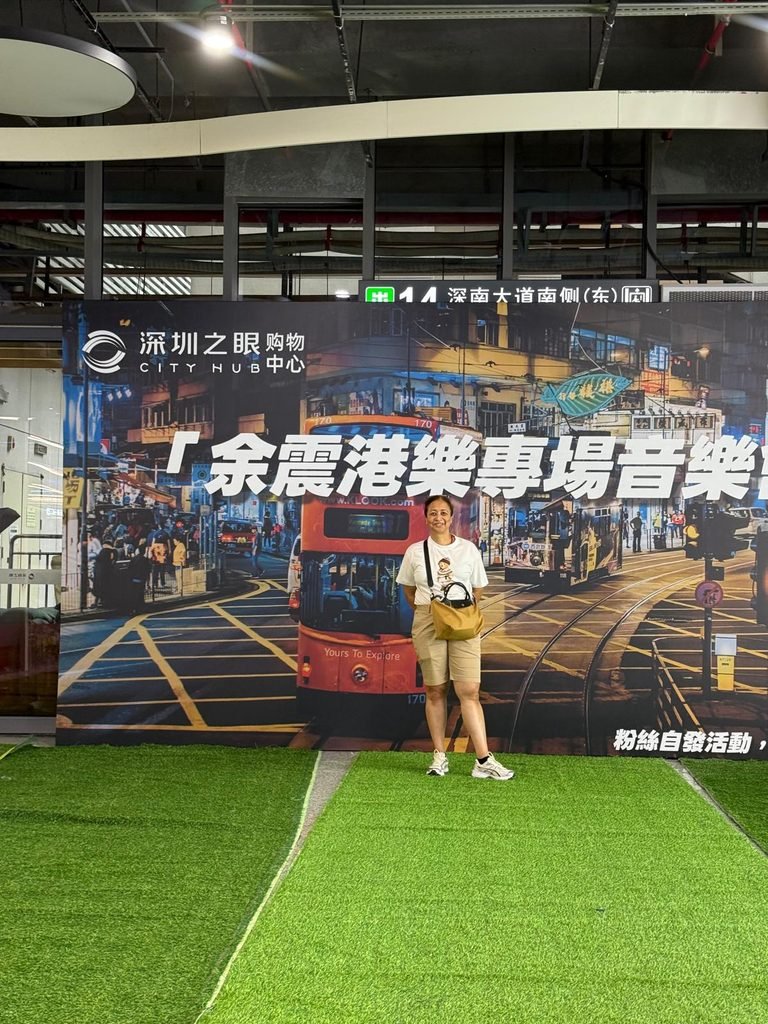
Observing as Anushka Driessen, it becomes obvious that clinging to the old Western illusion of control is a dangerous strategic miscalculation in a multipolar world economy.
The Choice for the Boardroom
Is your board of directors still debating the risks of AI integration, or are you already auditing which 50% of your current R&D pipeline will be worthless in 12 months? The era of “wait-and-see” is over.
Reshape your capital allocation strategy and leadership style today, or become tomorrow’s case study of how speed crushes an established order.
What does your action plan for the next 180 days look like? Do you choose controlled standing still or ruthless scaling?